Industrial Applications – Natural Pozzolan
Concrete, Infrastructure, Environmental, and Defense Applications
Natural Pozzolan in Military & Defense Concrete Applications
Offshore Concrete Construction
Natural pozzolan's unique ability to improve concrete strength underwater and resist salt air corrosion makes it ideal for military offshore installations. Helicopter landing platforms, naval bases, and coastal fortifications require concrete that maintains structural integrity under constant salt spray and wave action.
Technical Properties for Military Concrete:
- Concrete hardens in presence of moisture rather than requiring dry conditions
- Highly resistant to salt water degradation compared to conventional Portland cement concrete
- Superior bond strength in marine concrete environments
- Reduced maintenance requirements for concrete in hostile conditions
Rapid Deployment Concrete Construction
Military operations requiring quick-setting, durable concrete benefit from pozzolan cement additives' accelerated strength development and environmental resistance. Just as Roman engineers built concrete harbors that still function after 1,900 years, modern military concrete with pozzolan cement additives provides exceptional longevity.
Supporting Research:
Laboratory testing for the U.S. Army Engineer Research and Development Center found that partial replacement of Portland cement with natural pozzolan can maintain or exceed required compressive strengths for structural mortars and concretes when dosage is optimized.
Natural Pozzolan in Environmental Remediation Applications
Potential Oil Spill Containment
Natural pozzolan's porous, high-surface-area structure suggests potential as a low-cost mineral sorbent for hydrocarbon spills, similar to other natural sorbent media evaluated in recent oil-spill research. While natural fibers and plant-based sorbents currently dominate the "natural sorbent" category, mineral pozzolanic materials share key attributes—abundance, low cost, and benign chemistry—that make them promising candidates for future development as oil spill sorbents. Field validation and targeted testing would be required before large-scale deployment.
Hazardous Waste Stabilization
Pozzolanic binders (including Portland cement blended with pozzolanic materials such as fly ash, kiln dust, pumice, or natural pozzolan) are widely used in solidification/stabilization (S/S) treatments to immobilize heavy metals and improve waste handling characteristics. In these systems, pozzolanic reactions form a cementitious matrix that encapsulates contaminants, raises pH, and promotes precipitation of metals into less soluble forms, reducing leachability and supporting compliant landfill disposal. Natural pozzolan-based binders can therefore be used as part of engineered S/S systems to help prevent groundwater contamination from hazardous residuals, when designed in accordance with regulatory guidance and leaching test results.
Nuclear and Radioactive Waste Encapsulation
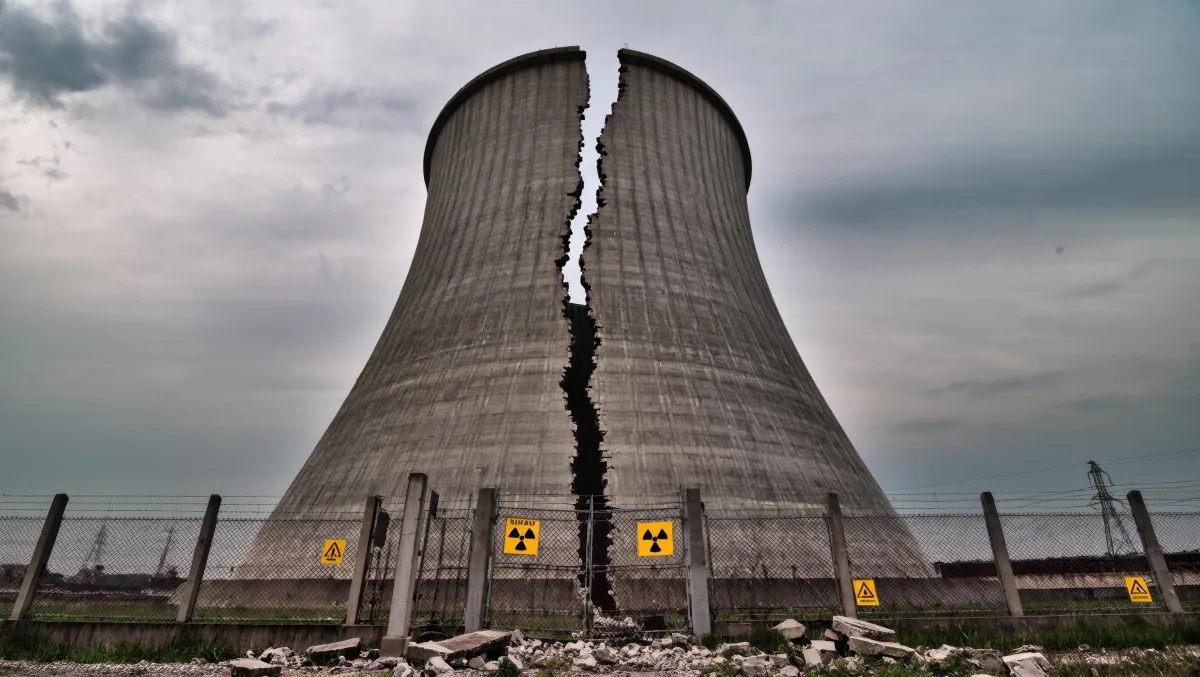
Natural pozzolan can be blended with Portland cement or lime to produce pozzolanic cements that have been investigated as candidate matrices for encapsulating high-level radioactive waste and spent fuel, due to their low permeability and ability to chemically bind certain radionuclides. Performance depends strongly on pozzolan type, fineness, and mix design; some volcanic tuffs have shown limited reactivity and lower strength, while finer, more reactive pozzolans can form dense, durable matrices. As a result, natural pozzolan is best described as a potential component of engineered nuclear waste forms, subject to rigorous qualification testing.
Natural Pozzolan in Government Infrastructure Concrete Projects
Federal Procurement with Historical Precedent
Just as Roman engineers built their empire on pozzolanic concrete infrastructure, modern governments recognize natural pozzolan cement additives' strategic value. The Pantheon's 1,900-year structural integrity with its famous oculus remaining perfect without maintenance provides compelling evidence for specifying natural pozzolan cement additives in critical government concrete infrastructure.
Transportation and infrastructure agencies have documented that natural pozzolans can provide similar or better mitigation of alkali-silica reactivity than Class F fly ash, while reducing permeability and improving sulfate resistance in concrete exposed to aggressive environments.
Federal Specifications:
- Executive orders prioritizing domestic mineral production
- Defense Production Act applications for strategic materials
- Federal Highway Administration pozzolan guidelines
- U.S. Army Corps of Engineers marine concrete specifications
State-Level Concrete Implementation:
- California: Mandatory SCM requirements in transportation concrete projects
- FHWA: Active promotion of pozzolan cement additives in concrete infrastructure
- GSA: Green building requirements for federal concrete facilities
Highway Concrete Construction
Department of Transportation projects utilize pozzolan cement additives for bridge deck concrete, roadway concrete construction, and repair applications where concrete durability and chemical resistance are essential. Laboratory programs for USACE and multiple DOTs show that replacing 10-30% of Portland cement with properly characterized natural pozzolan can maintain or increase compressive strength at later ages, lower heat of hydration, and significantly reduce ASR-related expansion.
See: ERDC-CERL TR-11-46
Water Treatment Concrete Facilities
Municipal water treatment plants benefit from pozzolanic concrete's chemical resistance and reduced permeability in aggressive chemical environments.
Dam Concrete Construction
Large-scale dam projects require pozzolan cement additives' thermal control properties to prevent cracking during concrete placement and curing, just as Roman engineers used pozzolan for massive concrete construction projects. Concrete mixes with natural pozzolan S produced about 15% less heat of hydration than equivalent mixes with fly ash, and about 30% less than straight Portland cement mixes, which is highly beneficial for massive placements such as dams and foundations.
See: ERDC-CERL TR-11-46
Natural Pozzolan in Private-Sector Concrete Transformation
Corporate Sustainability Concrete Mandates
Major construction companies integrate natural pozzolan cement additives into standard concrete specifications to meet corporate carbon reduction commitments and client sustainability requirements.
Data Center Concrete Construction
Hyperscale data center developers specify natural pozzolan cement additives for foundation and structural concrete to achieve carbon neutrality goals while ensuring long-term structural integrity for critical infrastructure. The Pantheon's 1,900-year service life with its famous oculus demonstrates the reliability required for mission-critical concrete construction.
Green Building Concrete Certification
LEED Platinum and Living Building Challenge projects routinely specify natural pozzolan cement additives as essential for achieving the highest sustainability certifications and market differentiation in concrete construction.
Specialized Industrial Uses of Natural Pozzolan in Concrete
Ready-Mix Concrete Industry
Concrete producers utilize natural pozzolan as cement additive to reduce costs, improve concrete workability, and meet environmental concrete specifications while achieving over 20% carbon reduction compared to man-made alternatives like fly ash. Natural pozzolan S1 met all ASTM C618 requirements for Class F/C fly ash, including fineness, strength activity index, autoclave expansion, and drying shrinkage, and was concluded to be a suitable substitute for fly ash in concrete.
See: ERDC-CERL TR-11-46
Precast Concrete Manufacturing
Precast concrete manufacturers specify natural pozzolan cement additives to achieve superior concrete surface quality, enhanced durability, and extended concrete service life.
High-Performance Concrete Applications
Specialized concrete requiring superior durability relies on pozzolan cement additives for enhanced concrete performance in aggressive environments. ASTM C1260 mortar-bar testing showed that concrete with natural pozzolan S significantly reduced alkali-silica expansion at 10-40% cement replacement levels, demonstrating its effectiveness as an ASR mitigation admixture.
See: ERDC-CERL TR-11-46
Shotcrete Applications
Underground construction and slope stabilization projects benefit from pozzolan cement additives' improved concrete workability and long-term strength development.
Natural Pozzolan in Wastewater Treatment & Filtration Applications
Wastewater Biofilters and Trickling Filters
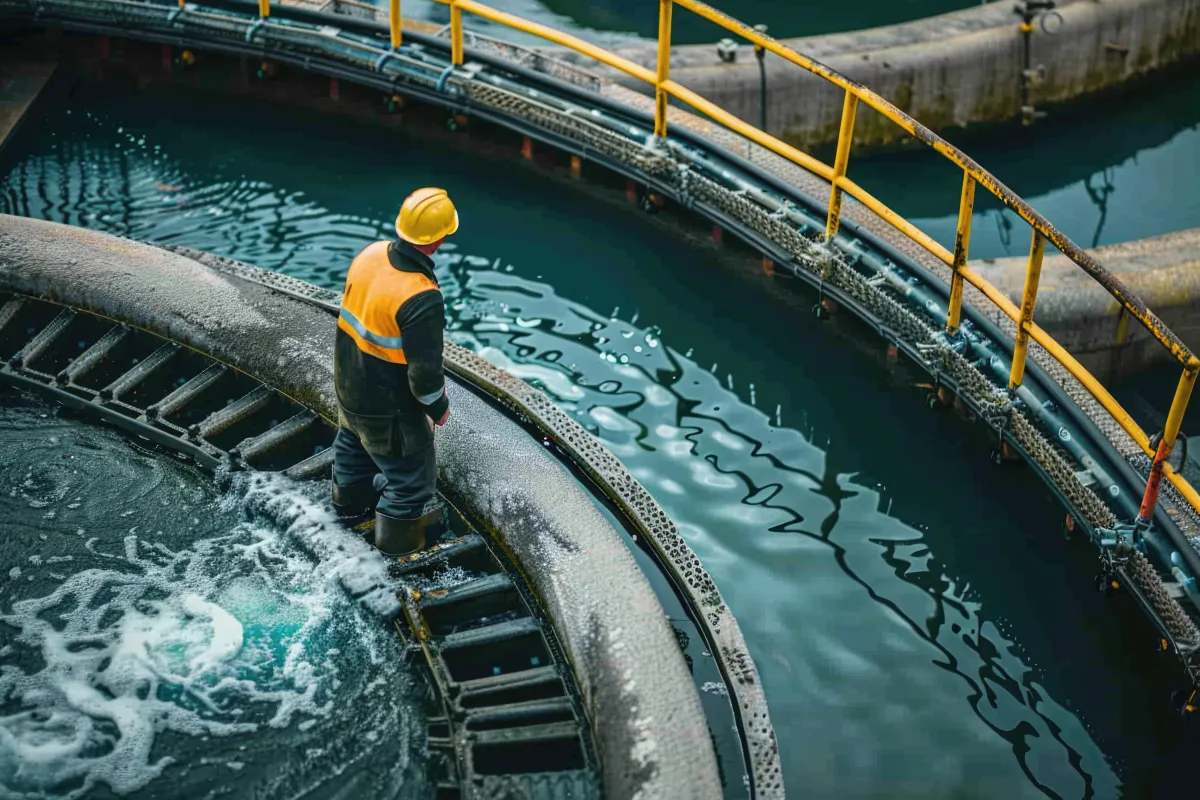
Real-world and pilot-scale wastewater studies in Algeria, Morocco, and elsewhere have used local natural pozzolan as trickling-filter media, vertical-flow filter packing, and biofilter support. In these systems, pozzolan-filled filters achieved up to ~94-98% COD and BOD₅ removal in domestic wastewater, significantly reduced turbidity and pathogens, and met national standards for reuse in irrigation.
A well-documented urban wastewater trickling filter using local natural pozzolan from Beni Saf (NW Algeria) at the WWTP of Ain El Houtz (Tlemcen region) reported:
- ~98% turbidity removal
- ~88% suspended solids removal
- ~94% COD removal
- ~98% BOD₅ removal
- >80% bacterial indicator reduction through biofilm formation
Authors conclude that natural pozzolan trickling filters can outperform conventional activated sludge effluent polishing and represent a promising ecological, low-cost secondary treatment option.
See: Maizi et al., 2022
Cost Advantages of Natural Pozzolan Biofilter Media
Natural pozzolan has been repeatedly evaluated as a low-cost packing material in aerated biofilters, trickling filters, and vertical-flow filters, where it serves as both a physical filter and a high-surface-area support for biofilm. Case studies in Algeria and Morocco using locally quarried pozzolan as the sole or primary media report high removal efficiencies for COD and BOD₅ (often >90%) while emphasizing the economic advantages of using an abundant local rock instead of imported synthetic filter media. Because pozzolan is durable, inert, and quarry-sourced, it can reduce media purchase cost, cut transport and replacement expenses, and simplify reactor construction, delivering lower lifecycle cost for wastewater polishing and reuse applications.
Industrial Filtration Media
Natural pozzolan's porous structure and chemical inertness make it effective for water filtration and industrial process applications outside of concrete construction.
Other Specialized Industrial Applications
Refractory Applications
High-temperature industrial processes utilize pozzolan's thermal stability and low thermal conductivity in specialized cement applications.
Chemical Processing
Industries requiring chemical-resistant construction materials rely on pozzolanic concrete's superior performance in corrosive environments.
Supply & Availability
Environmental Minerals' Southern California deposit contains 250+ million tons of reserves—a 500+ year mine life at full production. The company offers competitive pricing, early order and bulk discounts, and bulk transport delivery from major highway access 2 hours north of Los Angeles. With a 4,000-acre site, supply is essentially limitless, significantly reducing the risk of supply shortages or price volatility over the long term.
Technical Consultant
For technical inquiries, material samples, independent testing, or project specifications:
Jay Bergeron
Technical & Environmental Consultant
Additional Resources
Government & Military
U.S. Army Corps of Engineers - Marine Construction Guidelines
Defense Technical Information Center - Military Construction
Federal Highway Administration - Concrete Applications
Environmental & Industrial
EPA Environmental Remediation Technologies
EPA Solidification/Stabilization Treatment Guidance
Standards & Associations


